Cigar Wrapper Types Explained: The Complete Color & Flavor Chart
Updated 2026-07-02Picks link to real lines in the catalog
Cigar wrapper types confuse people because two different things share the same word. A wrapper has a color, and it has an origin, and the band almost never tells you which one a name is describing. Maduro is a color. Connecticut is an origin. Corojo is sometimes both. No wonder it feels like a code.
The wrapper is the outer leaf, the one you see and the one your lips touch. It is a single leaf out of the dozen or so in the cigar, but it carries an outsized share of the aroma and the first impression, which is why so much fuss gets made over it.
This guide untangles the two axes. First the color scale, candela through oscuro, which describes how light or dark the leaf is. Then the origin axis, Connecticut Shade versus Habano versus Corojo versus San Andres versus Broadleaf, which describes where the seed and the leaf come from. Get both in your head and a cigar band stops being a riddle.
I will also kill the most stubborn myth in the hobby, that a darker wrapper means a stronger cigar. It does not, and I will show you why with real examples from the catalog. Every flavor note here is a hedged generality, the tendency of a wrapper style, never a promise about a specific stick.
The picks
Cigars worth your time, with the specs straight from the catalog. Open any one to see its full sheet and what members have logged.
A clean example of a Connecticut Shade wrapper, which the catalog lists for this line out of Honduras at mild strength in the five-to-ten dollar range. Connecticut Shade is the pale, golden, smooth style most people meet first. Wrappers in this family tend toward mild, creamy, lightly sweet impressions, though as always the blend underneath has the final say.
Shown here as a Habano wrapper, listed in the catalog as Nicaraguan and full strength in the ten-to-fifteen dollar range. Habano is the Cuban-seed family, and wrappers in this style often lean toward pepper, spice, and a sweeter cedar character. Note that this line is full strength, a useful reminder that the strength lives in the whole blend, not the wrapper color.
A textbook Corojo wrapper per the catalog, Honduran and full strength in the five-to-ten dollar range. Corojo is a Cuban-descended leaf prized for spice and a leathery, sometimes earthy backbone. Wrappers in this family tend to read bolder and more peppery, which lines up with this one being listed as full, though that strength is the blend's doing as much as the leaf's.
A San Andres wrapper from Mexico, which the catalog has at full strength in the five-to-ten dollar range. San Andres is the dark Mexican leaf behind a lot of modern maduros, and wrappers in this style often suggest cocoa, coffee, earth, and a touch of dark sweetness. As ever, treat that as a tendency of the style rather than a guarantee about this cigar.
Full · Nicaragua · Connecticut Broadleaf wrapper · $10-$15
Here to make a point: this is a Connecticut Broadleaf wrapper, listed by the catalog as Nicaraguan and full strength in the ten-to-fifteen dollar range. Despite the Connecticut name, Broadleaf is a dark, thick, maduro-style leaf and nothing like the pale Connecticut Shade above. Broadleaf wrappers tend toward dark chocolate, espresso, and a sweet, rich character. The full strength rating shows how far Broadleaf sits from its mild-mannered Connecticut cousin.
The flavor notes on this page are generalities, and I want to be honest that they are. Tobacco is an agricultural product. The same wrapper style tastes different across farms, years, and blends, so anything stated as always or guaranteed would be a lie. I use words like tends to and often on purpose.
The example cigars are real lines from the catalog, chosen because their listed wrapper matches the style I am illustrating. I picked recognizable ones across the color and origin range, not a best-of list. They are there to put a real name next to an abstract category, nothing more.
No wrapper is ranked above another, and none of these picks carries a score. The catalog facts beside each one, wrapper, origin, strength, and price, come straight from the listing.
What cigar wrapper types are, and why people obsess over them
The wrapper is the single outer leaf wound around the finished cigar. Underneath it sit the binder, which holds the bunch together, and the filler, the blend of leaves that makes up most of the tobacco. The wrapper is one leaf out of many.
So why the obsession? Two reasons. It is the part you see, so it sells the cigar before you light it. And because it is the leaf against your lips and the first thing the smoke passes, it contributes a real and recognizable share of the aroma and flavor, more per leaf than anything inside.
That said, the wrapper does not run the show by itself. A common rule of thumb credits it with a meaningful slice of the flavor, but the filler and binder still do most of the work, and they set the strength almost entirely. Keep that proportion in mind as you read the rest of this page.
The color scale: candela to oscuro
The first axis is color, and the industry uses a rough sliding scale from lightest to darkest. The names blur at the edges and makers apply them loosely, so treat this as a spectrum, not a set of hard boxes.
Candela. Green. The leaf is dried fast with heat to lock in chlorophyll, which is why it stays green. It tends to taste mild, grassy, and a little tangy. Once the standard American look, now a niche throwback.
Claro. Light tan to pale gold. Usually shade-grown. Tends toward mild, smooth, and creamy. This is where most Connecticut Shade wrappers land on the color scale.
Colorado. Reddish brown. Often sun-grown. Tends to bring more sweetness and a fuller, rounder character than the lighter shades. The word colorado on a band is pointing at this reddish color.
Natural. Light to medium brown, the broad middle of the scale. A catch-all for wrappers that are neither pale nor dark. Flavors vary widely because the category is so wide.
Maduro. Dark brown. The leaf is fermented longer and hotter until it darkens and its sugars come forward. Tends to read sweeter and richer, with cocoa and coffee notes. Maduro is a process and a color, not a strength.
Oscuro. Nearly black, the darkest of all. The most extended fermentation. Tends toward deep, sweet, earthy intensity. Sometimes called double maduro.
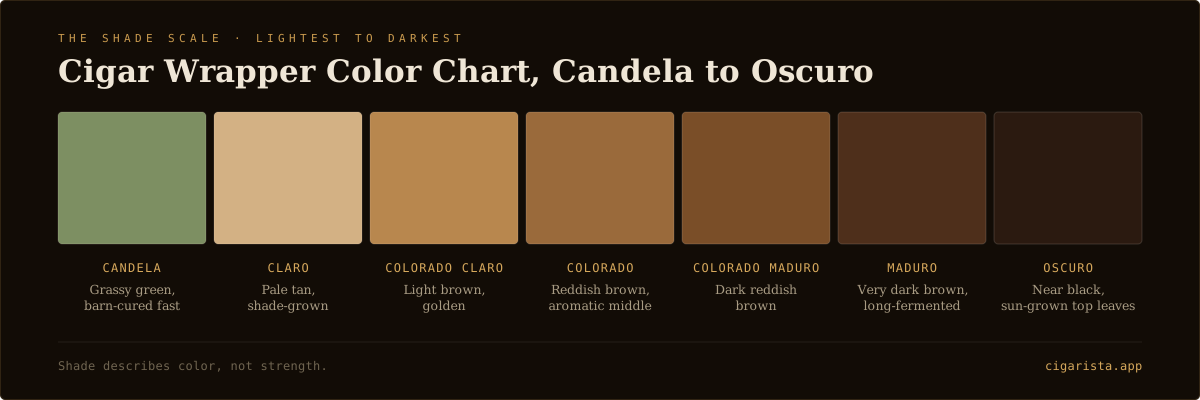
The shade scale · lightest to darkest
Seven shades, Candela to Oscuro
The classic wrapper color scale, left to right from lightest to darkest. The names blur at the edges and makers apply them loosely, so read it as a spectrum, not a set of hard boxes.
The cigar wrapper color chart, candela to oscuro. Treat it as a spectrum, not a set of hard boxes.
Shade
Color
Tendency
Candela
Green
Mild, grassy, a little tangy
Claro
Light tan to pale gold
Mild, smooth, and creamy
Colorado
Reddish brown
More sweetness, a fuller and rounder character
Natural
Light to medium brown
Varies widely; the broad middle of the scale
Maduro
Dark brown
Sweeter and richer, with cocoa and coffee notes
Oscuro
Nearly black
Deep, sweet, earthy intensity
What are the 7 cigar wrapper colors?
From lightest to darkest, the seven classic shades are Candela, Claro, Colorado Claro, Colorado, Colorado Maduro, Maduro, and Oscuro. Makers apply the names loosely, so treat the scale as a spectrum rather than a set of hard boxes. You will also see Natural used as a catch-all for the light-to-medium browns in the middle.
Is a darker cigar wrapper stronger?
No. A wrapper's color comes from how long the leaf was fermented and how much sun it saw, not from nicotine. Strength comes from the filler and binder blend inside the cigar, so a jet-black maduro can be mild and a pale Connecticut can be a powerhouse.
What is a Colorado wrapper?
Colorado is the reddish-brown middle of the wrapper color scale, sitting between the pale claro shades and the dark maduros. Leaves in this range are often sun-grown and tend to bring more sweetness and aroma than the lighter shades. The word describes the color, not a seed type or a strength.
What color is a Maduro wrapper?
Maduro wrappers are dark brown, running from deep chocolate to nearly black at the oscuro end of the scale. The color comes from a longer, hotter fermentation that also brings the leaf's sugars forward, which is why maduros tend to read sweeter and richer. Maduro names the color and the process, not the cigar's strength.
The other axis: where the leaf comes from
The second axis is origin and varietal, which is the seed type and the place it was grown. This is the axis that names like Connecticut, Habano, and Corojo are really describing, and it matters as much as color.
Connecticut Shade. Grown under cloth tents, originally in Connecticut and now widely in Ecuador too. Pale and smooth. The classic mild, creamy, lightly sweet wrapper, and the usual answer for a gentle smoke.
Habano. Cuban-seed tobacco grown outside Cuba, very often in Ecuador or Nicaragua. Tends to bring pepper, spice, and a sweet cedar note. A workhorse wrapper across the medium-to-full range.
Corojo. A Cuban-descended varietal, now grown mostly in Honduras and Nicaragua. Tends toward spice, leather, and earth, often with a bolder, more peppery edge.
San Andres. A dark leaf from the San Andres valley in Mexico. The backbone of countless modern maduros. Tends toward cocoa, coffee, earth, and dark sweetness.
Broadleaf. A thick, hardy American leaf, usually Connecticut Broadleaf or Pennsylvania Broadleaf, fermented dark into a maduro-style wrapper. Tends toward dark chocolate, espresso, and rich sweetness. More on the Connecticut name trap in a moment.
Wrapper
Origin
Flavor tendency
Example from this guide
Connecticut Shade
Connecticut, now widely Ecuador too
Mild, creamy, lightly sweet
Baccarat
Habano
Cuban seed grown outside Cuba, often Ecuador or Nicaragua
Pepper, spice, and a sweet cedar note
Aganorsa Leaf Habano
Corojo
Cuban-descended, mostly Honduras and Nicaragua
Spice, leather, and earth, a bolder peppery edge
Camacho Corojo
San Andres
The San Andres valley in Mexico
Cocoa, coffee, earth, and dark sweetness
CAO Zocalo
Broadleaf
American leaf, usually Connecticut or Pennsylvania
Dark chocolate, espresso, and rich sweetness
Crowned Heads Le Careme
The myth: darker does not mean stronger
This is the one I most want you to walk away with. A dark wrapper looks intense, so people assume it smokes intense. The link is not real.
Color comes from fermentation. A maduro or oscuro wrapper was fermented longer and hotter, which darkens the leaf and brings out sugar. That process makes the wrapper darker and often a touch sweeter and smoother. It does not add strength and it does not add nicotine.
Strength comes from the filler and binder inside the cigar, and from how those leaves were grown and where they sat on the plant. You can roll a mild filler under a jet-black maduro wrapper and get a sweet, gentle cigar. You can roll a powerhouse filler under a pale Connecticut and get something that knocks you sideways. The catalog is full of both. Judge strength by the blend, not the shade.
The Connecticut trap: Shade is not Broadleaf
Here is the single most common wrapper mix-up, and it is worth its own section. Two very different wrappers both carry the word Connecticut, and beginners get burned by it.
Connecticut Shade is grown under tents to keep it pale, thin, and smooth. It is the mild, creamy, golden wrapper, the gentle one, the one people recommend to newcomers.
Connecticut Broadleaf is grown in open sun, is thick and tough, and is fermented dark into a maduro-style leaf. It is one of the great dark wrappers, all chocolate and espresso and sweetness. It is not mild and it is not pale. It only shares a home state with Shade.
So if a band just says Connecticut, look closer. Pale and tan, you are probably holding Shade. Dark brown to near black, that is Broadleaf, and it is a completely different cigar. Same place, opposite ends of the color scale.
Flavor by wrapper, with the honest caveat
Here is the quick reference, with the caveat that these are tendencies of a style, not promises about any one cigar. The blend underneath can pull a cigar in any direction.
Candela tends to be mild and grassy. Connecticut Shade and other claro wrappers tend to be mild, creamy, and lightly sweet. Colorado wrappers tend to add sweetness and body. Habano tends toward pepper, spice, and sweet cedar. Corojo tends toward spice, leather, and earth. Natural is too broad to pin down. Maduro, San Andres, and Broadleaf tend toward cocoa, coffee, and dark sweetness, with the oscuro end of the scale going deepest of all.
Use this as a starting hypothesis, then test it for yourself. The fun of paying attention to wrappers is learning where your own palate agrees with the generalities and where it does not. That is also exactly the kind of thing worth writing down, so the next time you see a San Andres maduro on a shelf you remember whether the last one was for you.
Common questions
What are the different types of cigar wrappers?
It helps to split the question in two. By color, the rough scale runs candela, claro, colorado, natural, maduro, and oscuro, lightest to darkest. By origin and varietal, the common names are Connecticut Shade, Habano, Corojo, San Andres, and Broadleaf, among others. A band might use either kind of name, which is why wrappers feel confusing until you know there are two separate axes.
What is the difference between a maduro and a natural or colorado claro wrapper?
It is mostly about how dark the leaf was fermented. A natural or colorado claro wrapper is lighter, fermented less, and tends to taste smoother and milder. A maduro is fermented longer and hotter until it turns dark brown and its sugars come forward, so it tends to read sweeter and richer. The line between the shades is a sliding scale, and makers apply the terms loosely.
Does a darker wrapper mean a stronger cigar?
No, and this is the myth worth unlearning. The wrapper's color comes from fermentation, which darkens the leaf and often makes it a little sweeter, but adds no strength and no nicotine. Strength comes from the filler and binder rolled inside. Plenty of dark maduros are mild or medium, and plenty of pale Connecticuts will knock you flat. Judge strength by the blend, not the shade.
What is a candela wrapper?
Candela is the green wrapper. The leaf is dried quickly with heat so it keeps its chlorophyll, which locks in that distinctive green color. It tends to taste mild, grassy, and slightly tangy. It was once the standard American look, fell out of fashion, and now shows up as a niche throwback, often around St. Patrick's Day.
What wrapper is best for beginners?
Connecticut Shade is the usual starting point: pale, smooth, and mild, with creamy and lightly sweet tendencies that are easy to like. Just watch the Connecticut name trap. Connecticut Broadleaf shares the word but is a dark, full maduro-style leaf, not a gentle one. If you want easy going, look for Shade, claro, or candela and lean toward milder blends while you find your footing.
What does colorado mean on a cigar?
Colorado refers to a reddish-brown wrapper color, a step darker than the pale claro shades and lighter than a full maduro. It is often a sun-grown leaf, and wrappers in that range tend to bring more sweetness and body. Some makers also use compound terms like colorado maduro for a reddish-brown leaf on the darker side. Treat colorado as a pointer to color, not a strict spec.